The demand for solar energy is rapidly increasing as more people and businesses seek sustainable and cost-effective energy solutions. Choosing the right solar panels for your solar system can be a complex decision, especially with various types available in the market. Among the most popular options are monocrystalline and polycrystalline solar panels. Rayzon Solar, a top solar panel manufacturer is a comprehensive guide that will help you understand the differences between these two types, enabling you to make an informed decision that best suits your energy needs.
Understanding Solar Panels: Monocrystalline vs. Polycrystalline
Solar panels, also known as solar modules, are made up of solar cells that convert sunlight into electricity. The efficiency, cost, and aesthetic appeal of solar panels depend significantly on the type of solar cells used. The two primary types of solar cells are monocrystalline and polycrystalline.
Monocrystalline Solar Panels
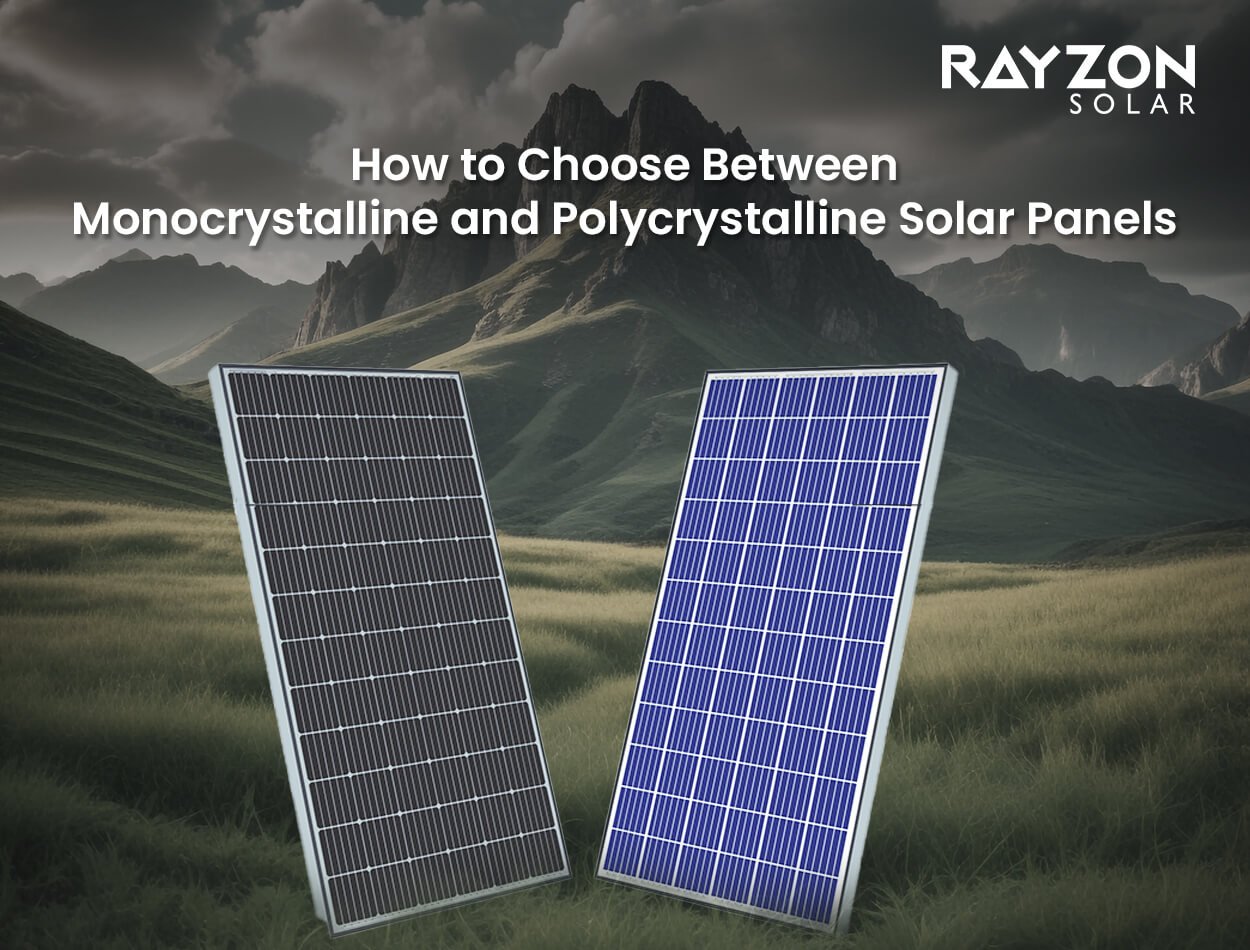
Monocrystalline solar panels are made from a single continuous crystal structure. This type of solar cell is known for its high efficiency and sleek appearance.
Key Features:
Efficiency: Monocrystalline panels are among the most efficient solar panels available. They typically have efficiencies between 15-24% and can go even higher with advanced technologies.
Aesthetics: These panels have a uniform black look, making them more visually appealing for residential installations.
Space Efficiency: Due to their higher efficiency, monocrystalline panels require less space to generate the same amount of power as polycrystalline panels.
Longevity: They tend to have a longer lifespan, often backed by warranties of 25 to 30 years from Rayzon Solar a leading solar panel manufacturer.
Polycrystalline Solar Panels
Polycrystalline solar panels are made from silicon crystals that are melted together. These panels are generally less expensive but also slightly less efficient than monocrystalline panels.
Key Features:
Cost: Polycrystalline panels are cheaper to produce, making them more affordable for budget-conscious buyers.
Efficiency: They have lower efficiencies compared to monocrystalline panels, typically ranging from 13-16%.
Aesthetics: These panels have a bluish kind and a speckled look due to the many silicon crystals.
Heat Tolerance: Polycrystalline panels tend to have a lower heat tolerance, which can affect their performance in extremely hot climates.
Factors to Consider When Choosing Solar Panels
1. Efficiency and Performance:
- Monocrystalline panels are the best choice if you have limited roof space and need the most efficient solution.
- Polycrystalline panels are suitable for larger installations where space is not a pressure.
2. Cost:
- Polycrystalline panels are generally less expensive upfront, making them a good option for those on a tight budget.
- Monocrystalline panels are costlier, offer better efficiency and longer-term savings.
3. Aesthetic Preferences:
- If the appearance of your solar installation is important, monocrystalline panels offer a more uniform and sleek look.
4. Installation Environment:
- Consider the climate and typical weather conditions in your area. Monocrystalline panels perform better in low-light conditions and higher temperatures.
The Role of Solar Panel Manufacturers
When choosing solar panels, it is essential to consider the manufacturer’s reputation and the quality of their products. Rayzon Solar is the Best Solar panel manufacturer in India are known for producing high-quality, reliable solar panels.
Why Choose Rayzon Solar?
Innovation and Quality: Rayzon Solar is renowned for its innovative photovoltaic technology and commitment to quality.
Diverse Product Range: They offer a wide range of products, including both monocrystalline and polycrystalline panels, catering to various needs and budgets.
Sustainability: As a top solar company, Rayzon Solar emphasizes sustainability, contributing to the growth of renewable energy sources.
Innovations in Solar Technology
The solar industry is continually evolving, with innovations that enhance the performance and application of solar panels. Two notable advancements are bifacial modules and bifacial technology.
Bifacial Modules
Dual-Sided Energy Production: Bifacial solar panels can capture sunlight on both sides
Versatility: These panels are ideal for installations where sunlight reflects off surfaces like snow, water or white rooftops.
Bifacial Technology
Enhanced Efficiency: Bifacial technology can boost the efficiency of solar systems by up to 30%, making them a preferred choice for many applications.
Durability: These panels are designed to with stand harsh weather conditions, ensuring long-term performance and reliability.
Read More: Rayzon Solar | Bifacial Technology
Making the Final Decision
Choosing between monocrystalline and polycrystalline solar panels depends on your specific needs, budget, and installation environment. Here are a few steps to help you decide:
1. Assess Your Energy Needs: Determine how much energy your household or business requires. This will influence the size and type of solar system you need.
2. Evaluate Your Roof Space: Measure the available space for solar panel installation. Higher efficiency panels like monocrystalline might be necessary for smaller areas.
3. Consider Long-Term Savings: While polycrystalline panels are cheaper upfront, monocrystalline panels offer better efficiency and long-term savings.
4. Consult with Experts: Engage with top solar panel manufacturers and consult with solar energy experts to get personalized advice and recommendations.
The Future of Renewable Energy in India
India is rapidly becoming a leader in renewable energy adoption, with significant investments in solar energy. The government's supportive policies and incentives have growth in the solar sector, making it an attractive market for top solar companies.
Opportunities and Growth
- Government Initiatives: Programs like the National Solar Mission aim to increase the capacity of solar energy installations across the country.
- Investment in Infrastructure: There is a growing focus on modernizing the grid infrastructure to support renewable energy sources.
- Public Awareness: Increasing awareness about the benefits of solar energy is driving demand for residential and commercial installations.
Related Resources
1. Choosing the Best Solar Panels2. Top Solar Panel Manufacturer3. Benefits of Solar Energy4. Maximizing Solar Panel Efficiency: Expert Tips
Conclusion
Choosing the right solar panels is a critical decision that can significantly impact the efficiency and cost-effectiveness of your solar energy system. Monocrystalline panels, with their high efficiency and sleek appearance, are ideal for those seeking the best performance and long-term savings. Polycrystalline panels, on the other hand, offer a more affordable option for those with sufficient installation space and a limited budget.
Leading solar panel manufacturer Rayzon Solar provides a wide range of high-quality solar panels to meet diverse needs. By considering factors such as efficiency, cost, aesthetics, and installation environment, you can make an informed decision that aligns with your energy goals. As India continues to embrace renewable energy, the future looks bright for solar technology. Innovations like bifacial modules and advanced photovoltaic technology are set to enhance the performance and versatility of solar panels, further driving the adoption of green energy solutions.
Whether you are looking for the best solar panel for home use or a large-scale commercial installation, understanding the differences between monocrystalline and polycrystalline panels will help you make the best choice for a sustainable and energy-efficient future.
You Can Also Read This:- How Much Space Do You Need for Solar Panels in Commercial Solar Projects?