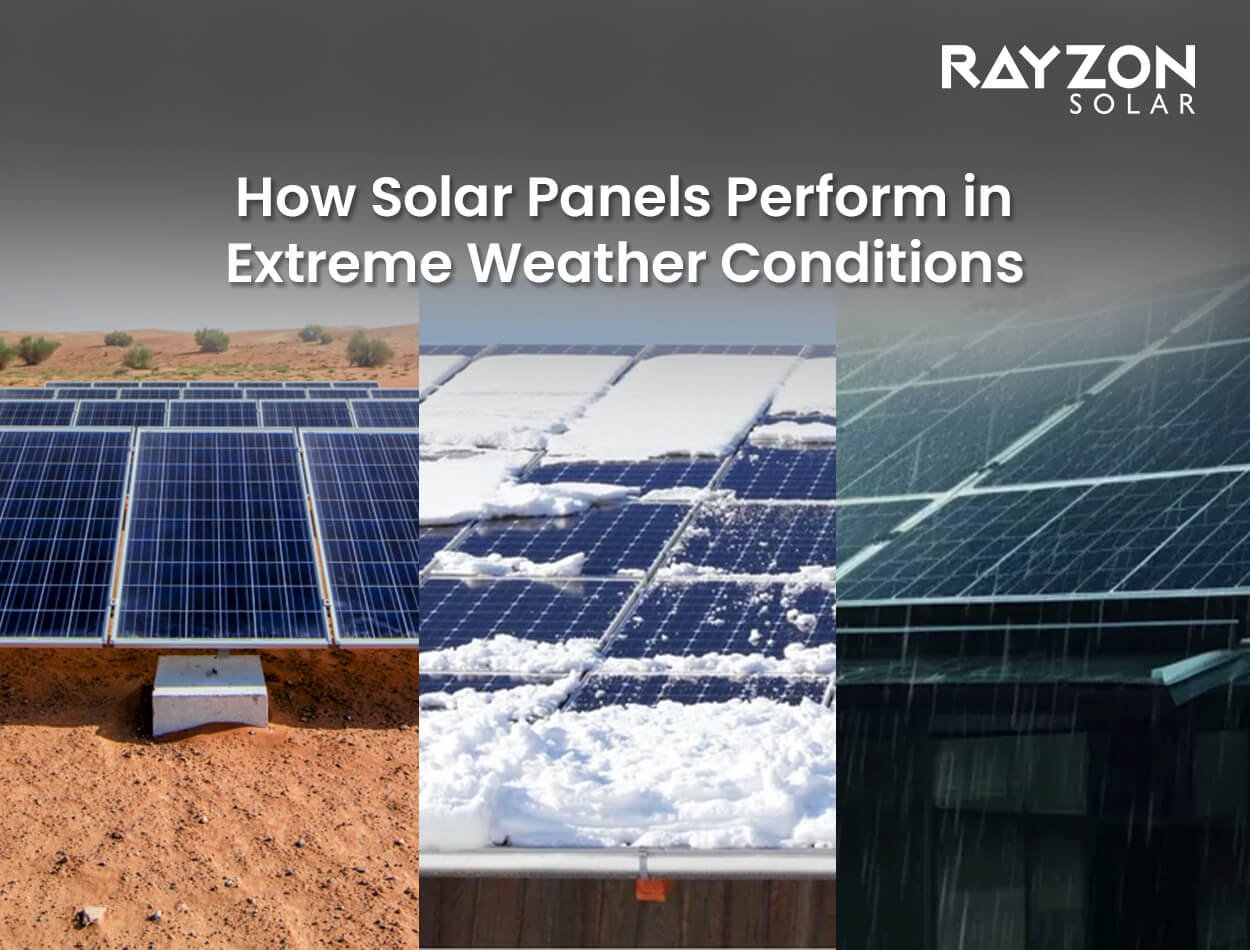
Solar panels are often considered a long-term investment for sustainable energy. But how do they hold up when faced with extreme weather conditions? From scorching heatwaves to frigid winters and powerful storms, understanding the durability and performance of solar panels in various climates is essential for anyone considering solar energy. At Rayzon Solar, a leader in high-efficiency solar technology, we’ve engineered our panels to withstand harsh conditions while maintaining peak performance. Let’s explore how solar panels perform in extreme weather.
Solar Panels in High Temperatures
Contrary to popular belief, solar panels don’t thrive solely in hot weather. While they require sunlight to generate electricity, excessive heat can slightly reduce their efficiency. This phenomenon is measured as the temperature coefficient, which indicates how much performance decreases as temperatures rise.
Key Features of High-Temperature Performance:
1. Durable Materials: Modern solar panels, like those by Rayzon Solar, are designed with heat-resistant materials to minimize performance loss.
2. Effective Ventilation: Proper installation ensures airflow around panels, preventing overheating.
3. Optimized for Efficiency: Rayzon’s Mono PERC panels maintain high output even in intense heat.
Pro Tip: Install solar panels at an angle to improve ventilation and reduce temperature impacts.
Additional Considerations for Hot Climates
- Urban Heat Island Effect: Solar panels in cities may experience slightly higher temperatures due to heat retention in urban areas. Proper placement and cooling solutions mitigate this effect.
- Panel Cleaning: Dust accumulation in hot, dry climates can affect panel efficiency. Regular cleaning ensures maximum performance.
Solar Panels in Cold Climates
Surprisingly, solar panels can perform better in cold weather than in hot climates. Photovoltaic cells are more efficient at converting sunlight into electricity when temperatures are low. Snowfall, however, poses unique challenges and benefits:
Snow’s Impact on Solar Panels:
- Reduced Output: Accumulated snow can block sunlight temporarily.
- Self-Cleaning Effect: As snow melts, it cleans dirt and debris from panels.
- Increased Reflection: Snow’s reflective surface can amplify sunlight, boosting energy production.
Rayzon Solar’s panels are designed with a smooth surface to prevent snow accumulation and ensure optimal performance in winter conditions.
Preparing Panels for Extreme Cold:
- Anti-reflective Coatings: These maximize energy absorption even in low-light conditions.
- Tilted Installation: Installing panels at an angle prevents snow from accumulating excessively.
Solar Panels in Heavy Rain and Storms
Rain and storms are common concerns for solar panel durability. High-quality panels, like those manufactured by Rayzon Solar, undergo rigorous testing to withstand extreme conditions.
Why Rayzon Solar Panels Excel in Storms:
1. Waterproofing: Panels are sealed with advanced materials to prevent water ingress.
2. Wind Resistance: Tested to endure high wind speeds, ensuring stability during storms.
3. Durable Glass: Tempered glass protects against hail and debris.
Maintenance Tips:
- Inspect panels after severe storms to check for damage.
- Clear debris to maintain efficiency.
- Ensure mounting systems are secure to handle repeated storm exposure.
Solar Panels in High Wind Conditions
Strong winds, especially in cyclone-prone regions, can test the resilience of solar panels. At Rayzon Solar, we’ve engineered our panels to withstand winds of up to 2400 Pa, ensuring durability in adverse conditions.
Wind-Resistant Features:
- Robust Frames: Aluminum frames provide structural integrity.
- Secure Mounting: Advanced mounting systems prevent panels from detaching.
- Flexible Design: Panels are designed to flex slightly under pressure without cracking.
Preparing for High Wind Zones:
- Use certified installers to ensure panels are anchored securely.
- Opt for ground-mounted systems in areas with extreme wind conditions.
Solar Panels and Lightning
Solar panels are generally safe during lightning storms, as they are grounded to prevent damage. However, installing surge protection devices can provide an additional layer of security for your system.
Safety Measures:
- Use proper grounding techniques.
- Install surge protectors to shield inverters and electrical components.
- Conduct periodic inspections of electrical connections to ensure they remain secure.
Additional Weather-Related Challenges and Solutions
Extreme Humidity:
In tropical regions, high humidity can affect panel wiring and connections. Rayzon Solar’s panels use corrosion-resistant materials to ensure longevity in such environments.
Hailstorms:
Hail can be destructive, but Rayzon panels are built with tempered glass that withstands hailstones up to 25 mm in diameter. Regular inspections post-storms help identify potential damages early.
Dust and Sandstorms:
In desert regions, dust and sand can reduce energy efficiency. Regular cleaning and protective coatings can help maintain optimal performance.
How Rayzon Solar Ensures Durability
At Rayzon Solar, we prioritize durability and performance in all weather conditions. Our panels are tested under extreme scenarios to ensure they meet international standards for quality and resilience.
Why Choose Rayzon Solar Panels:
1. Rigorous Testing: Panels undergo thermal cycling, humidity-freeze, and mechanical load tests.
2. High Efficiency: Advanced technology ensures minimal performance loss in any climate.
3. Extended Warranty: Confidence in our quality allows us to offer industry-leading warranties.
Discover our range of solar panels designed for extreme durability.
FAQs: Solar Panels in Extreme Weather
1. Can solar panels survive a hailstorm?
Yes, high-quality solar panels like those from Rayzon Solar are built with tempered glass to withstand hail up to 25 mm in diameter.
2. Do solar panels work during heavy rains?
Absolutely. Rain helps clean the panels, ensuring optimal sunlight absorption when the skies clear.
3. What happens to solar panels during a hurricane?
Panels with strong frames and secure mounting, like Rayzon’s, are designed to endure hurricane-level winds.
4. Can snow damage solar panels?
Snow does not damage panels; in fact, it can clean them as it melts. However, excessive weight from snow accumulation should be monitored.
5. Are solar panels safe during lightning storms?
Yes, when properly grounded and equipped with surge protectors, solar panels are safe during lightning storms.
Conclusion
Solar panels are a robust and reliable solution for harnessing renewable energy, even in extreme weather conditions. At Rayzon Solar, our cutting-edge technology ensures that your solar investment delivers consistent performance, no matter the climate.
Ready to make the switch to durable, high-efficiency solar panels? Explore Rayzon Solar’s product range or contact us for expert guidance. Harness the power of the sun with confidence, rain or shine!