Solar power stands as a Light of sustainability in the realm of renewable energy, illuminating the path towards a greener future. At the forefront of this transformative industry shines Rayzon Solar, esteemed for its unwavering commitment to innovation and excellence. As a leading solar panel manufacturer, Rayzon Solar sets the gold standard, continuously pushing the boundaries of solar technology. With the solar energy sector advancing at a rapid pace, delving into the nuances of solar inverters becomes imperative. These devices play a pivotal role in shaping the evolving landscape of solar energy, particularly within the valued company Rayzon Solar.
What is a Solar Inverter?
A solar inverter is an important component in any solar power system. Its primary function is to convert the direct current (DC) electricity generated by solar panels into alternating current (AC) electricity, which is the standard form of electricity used by household appliances and the electrical grid. Without a solar inverter, the energy produced by solar panels would be incompatible with the electrical systems in homes and businesses, rendering it unusable. Thus, the solar inverter plays a vital role in ensuring that the renewable energy harnessed from the sun can be efficiently and effectively utilized.
Types of Solar Inverters
There are several types of solar inverters, each suited for different applications and system sizes. Understanding the differences can help you choose the best option for your solar energy needs.
1. String Inverters
String inverters, also known as central inverters, are the most common type of inverter used in residential and commercial solar installations. They connect a series, or "string," of solar panels to a single inverter.
Advantages:
- Cost-effective for small to medium installations
- Easier to manage and maintain
Disadvantages:
- Performance is limited by the weakest panel in the string
- Less effective in installations with shading issues
2. Microinverters
Microinverters are compact inverters installed directly on individual solar panels. Unlike string inverters, microinverters convert DC to AC at the panel level, offering potential performance improvements.
Advantages:
- Improved performance in shaded conditions
- Enhanced monitoring and maintenance at the panel level
- Scalability for future system expansion
Disadvantages:
- Higher initial cost compared to string inverters
- The more complex installation process
3. Power Optimizers
Power optimizers are devices that complement string inverters by maximizing the output of each solar panel. They are installed at the panel level but work in conjunction with a central inverter to convert DC to AC electricity.
Advantages:
- Increased system efficiency by maximizing the output of each panel
- Better performance in shaded conditions
- Lower cost than microinverters
Disadvantages:
- Requires both power optimizers and a central inverter
- More complex than string inverter-only systems
4. Hybrid Inverters
Hybrid inverters, also known as battery-based inverters, are designed for solar systems integrated with energy storage solutions. They facilitate the seamless flow of electricity between solar panels, battery storage, and the electrical grid.
Advantages:
- Supports energy storage for backup power
- Can operate off-grid or grid-tied
- Efficient management of solar and battery power
Disadvantages:
- Higher cost compared to standard inverters
- More complex installation and configuration
5. Off-Grid Inverters
Off-grid inverters are utilized in solar systems that operate independently of the electrical grid. They convert DC electricity from solar panels into AC power and manage battery storage for standalone power systems.
Advantages:
- Independence from the electrical grid
- Ideal for remote locations
Disadvantages:
- Higher initial investment and maintenance costs
- Requires careful management of energy consumption and storage
Uses of Solar Inverters
Solar inverters play a crucial role in various applications, from residential homes to large-scale commercial projects. Here’s a closer look at how they are used:
1. Residential Solar Systems
In residential settings, solar inverters are used to convert the DC electricity generated by rooftop solar panels into AC electricity for home use. Homeowners can choose between string inverters, microinverters, or hybrid inverters depending on their needs and budget. With the growing popularity of home energy storage systems, hybrid inverters are becoming a popular choice for those looking to maximize their energy independence.
2. Commercial Solar Installations
Commercial solar installations often use string inverters or power optimizers due to their cost-effectiveness and scalability. Large commercial systems benefit from the centralized nature of string inverters, which simplify installation and maintenance. Power optimizers are also preferred for their ability to maximize system efficiency and provide detailed performance monitoring.
3. Off-Grid Solar Systems
For off-grid solar systems, off-grid inverters are essential. These systems are typically found in remote areas where connecting to the electrical grid is impractical. Off-grid inverters manage the energy produced by solar panels and stored in batteries, ensuring a reliable power supply for homes, businesses, or communities in isolated locations.
4. Utility-Scale Solar Farms
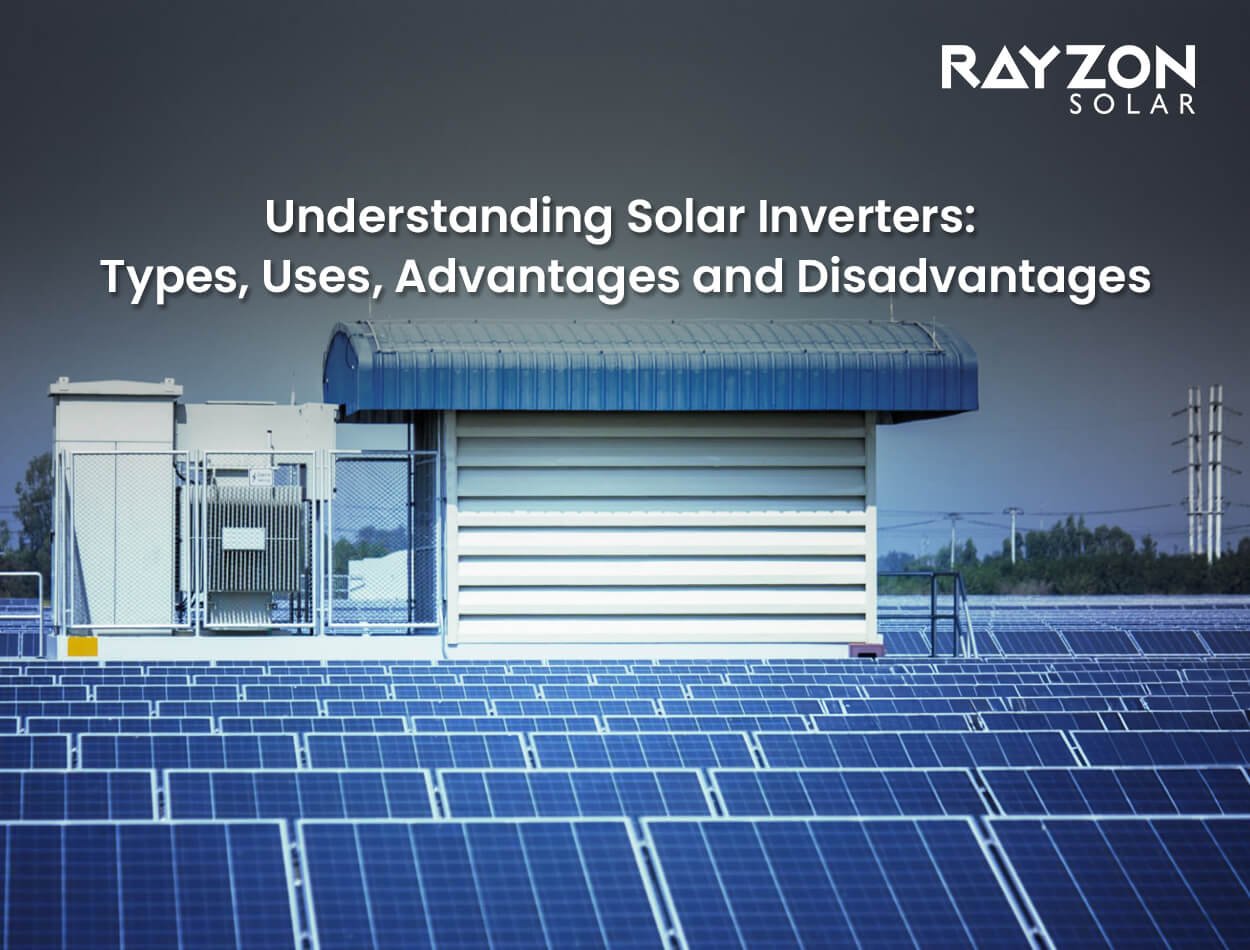
Utility-scale solar farms use large, centralized inverters to manage the massive amounts of electricity generated by extensive arrays of solar panels. These inverters must be highly efficient and reliable to ensure the stable production and supply of electricity to the grid.
5. Comprehensive Monitoring Solutions
Effective monitoring is crucial for optimizing the performance of solar energy systems. Rayzon Solar provides comprehensive monitoring solutions that allow users to track the performance of their solar panels and inverters in real time. These solutions help detect issues early, ensuring that systems operate at peak efficiency and deliver maximum energy savings.
Conclusion
Understanding the diverse array of solar inverters and their applications is key for anyone considering a solar energy system. Whether for residential, commercial, off-grid, or utility-scale setups, the choice of inverter intensely influences system performance and efficiency. Companies like Rayzon Solar are pivotal in propelling solar technology forward, offering top-notch products and groundbreaking solutions that enhance solar energy accessibility and efficacy. Partnering with leading solar panel manufacturers ensures access to cutting-edge technology for harnessing solar power. By making informed choices regarding solar inverters and collaborating with reputable manufacturers, individuals can optimize solar energy benefits, shrink their carbon footprint, and foster a sustainable future.
You Can Also Read This:- The Environmental Impact of Solar Energy