Choosing the right solar panel installation type becomes crucial as more homes and businesses turn to solar energy. Two popular options are rooftop solar panels and ground-mounted solar panels. Each has its unique advantages and challenges, and the choice between them depends on several factors such as space availability, energy needs, and budget. In this blog, we'll explore the pros and cons of rooftop vs ground-mounted solar, helping you decide which option is best for your solar installation needs.
What Are Rooftop Solar Panels?
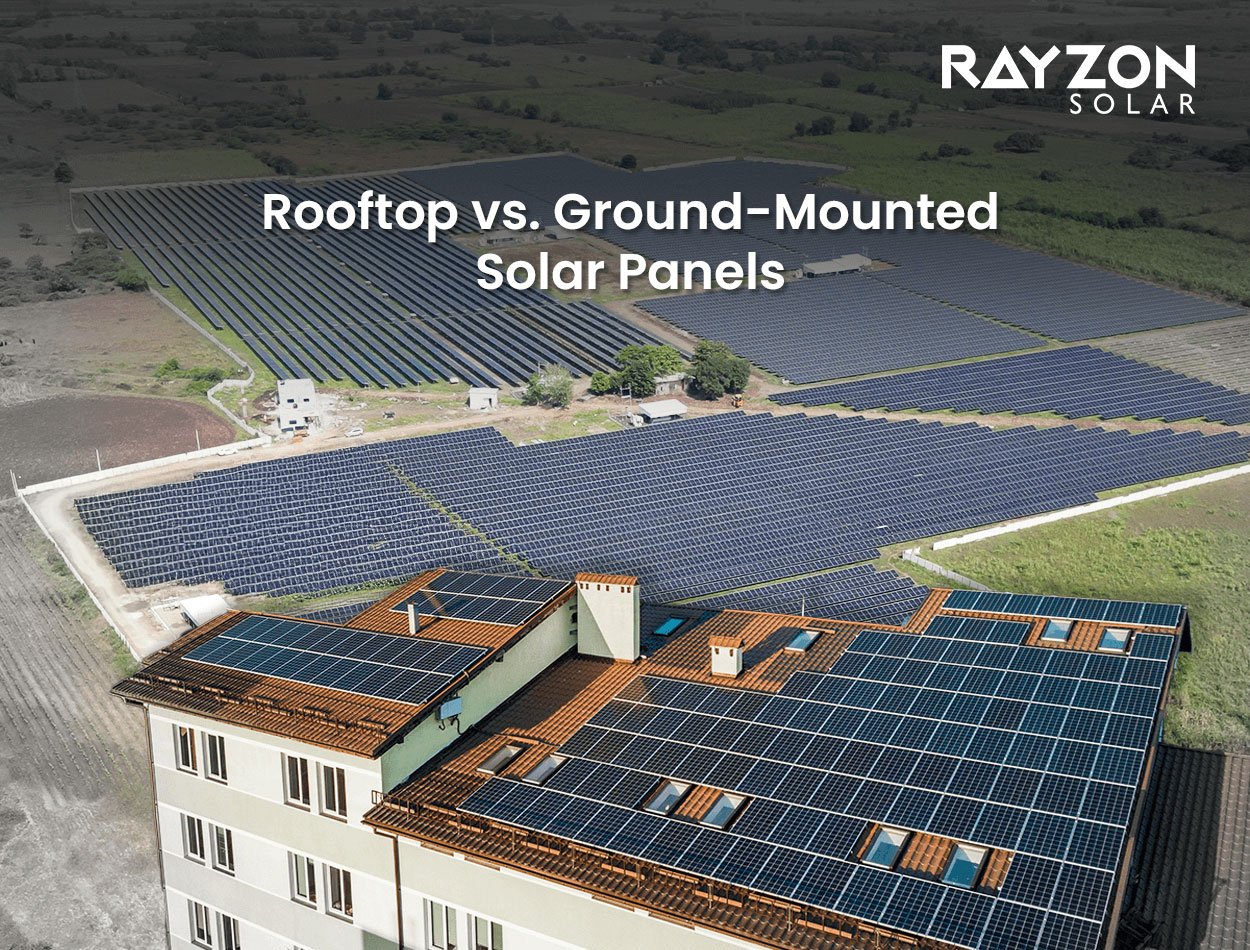
Rooftop solar panels are installed directly on the roof of a building. They are ideal for homes and businesses with limited ground space and are commonly seen in residential neighbourhoods. Here are the key benefits and disadvantages of rooftop solar systems:
Pros of Rooftop Solar Panels:
- Efficient Use of Space:Since rooftops are typically unused, installing solar panels there maximizes your property's available space.
- Lower Installation Costs: Rooftop solar panel installation tends to be more affordable than ground-mounted systems, as it requires less material for support structures.
- Ideal for Residential and Small Commercial Properties: Rooftop solar is often the best solution for homeowners and small businesses with limited space for a solar energy system.
Cons of Rooftop Solar Panels:
- Limited Flexibility: The size and orientation of your roof may limit how many panels you can install and how much energy you can generate.
- Roof Integrity: Installing rooftop solar panels requires drilling into the roof, which could lead to potential issues like leaks if not done properly.
- Difficult Maintenance: Regular cleaning and maintenance of rooftop panels can be challenging due to accessibility issues.
For more insights, check out our article: Rayzon Solar Sheds Light on Solar Roofs and Sustainable Living.
What Are Ground-Mounted Solar Panels?
Ground-mounted solar panels are installed on the ground using a support structure. These systems are more common on large properties with sufficient land. Here are the main advantages and disadvantages of ground-mounted solar systems:
Pros of Ground-Mounted Solar Panels:
- High Energy Output: Ground-mounted solar systems can be scaled up to accommodate large energy needs, making them perfect for businesses, farms, and large estates.
- Optimal Panel Positioning: Unlike rooftop systems, ground-mounted panels can be adjusted for optimal orientation to capture maximum sunlight.
- Easy Maintenance: Since the panels are easily accessible, cleaning and maintenance are simpler than rooftop systems.
Cons of Ground-Mounted Solar Panels:
- Requires More Space: Ground-mounted solar panels need significant space, making them less suitable for small residential properties.
- Higher Installation Costs: The need for additional materials, such as mounting structures and longer wiring, makes ground-mounted installations more expensive.
- Potential for Land Disruption: Installing solar panels on the ground may involve disrupting the landscape, which might not be ideal for homeowners who wish to preserve their lawn or garden.
For more information, read our article: How Much Space Do You Need for Solar Panels in Commercial Solar Projects?
Rooftop vs. Ground-Mounted Solar: A Detailed Comparison
When choosing between rooftop and ground-mounted solar, several factors must be considered. Here’s a side-by-side comparison:
| Factor | Rooftop Solar Panels | Ground-Mounted Solar Panels |
|---|---|---|
| Space | Uses existing roof space | Requires additional ground space |
| Cost | Lower installation cost | Higher installation cost |
| Energy Output | Limited by roof size | Can scale for large energy needs |
| Maintenance | More difficult to access | Easier to maintain and clean |
| Flexibility | Restricted by roof orientation | Flexible positioning for optimal sunlight |
| Installation Time | Faster installation | Longer and more complex installation |
Cost Comparison of Rooftop and Ground-Mounted Solar Panels
One of the biggest factors influencing your decision will likely be cost. In general, rooftop solar panels are more affordable to install than ground-mounted systems. Since rooftop systems use your existing roof as a base, the installation involves fewer materials and less labor. On the other hand, ground-mounted solar panels require additional materials like mounting structures, which drive up the overall cost.
While rooftop systems are ideal for those on a budget, ground-mounted systems offer greater flexibility and scalability, which could result in higher energy savings in the long run.
Is Rooftop Solar Better for Residential Homes?
Rooftop solar systems are generally more practical for residential use. The panels take up no yard space and offer enough energy generation to meet the needs of most households. Roof-mounted systems are also easier to integrate into existing home designs and can even increase property value by reducing energy costs.
Benefits of Ground-Mounted Solar Systems for Large Properties
For large properties, ground-mounted solar systems offer unmatched benefits. These include:
- Larger Installations:You can install more panels, leading to higher energy generation.
- Energy for Businesses: Ideal for businesses with large energy needs, such as farms or commercial spaces.
- Increased Efficiency: By setting the panels at the optimal angle, ground-mounted systems can deliver more energy per panel than their rooftop counterparts.
Solar Panel Efficiency: Rooftop vs. Ground-Mounted
Another important consideration is solar panel efficiency. Ground-mounted systems typically outperform rooftop systems because they can be placed at the ideal angle to capture sunlight. However, with advancements in solar technology, rooftop solar panels have become increasingly efficient and may be more than sufficient for residential and small commercial energy needs.
For larger properties or businesses with high energy demands, a ground-mounted solar system offers a significant advantage in terms of energy output and efficiency.
Read More: Maximizing Solar Panel Efficiency - 7 Expert Tips
Which Option Is Right for You?
Ultimately, the decision between rooftop and ground-mounted solar comes down to your specific needs and property characteristics. Rooftop solar panels are ideal for homeowners with limited space who want a cost-effective solution. Meanwhile, ground-mounted solar panels are perfect for large properties and businesses looking to maximize energy output and efficiency.
Before making a decision, consult with a reputable solar energy provider like Rayzon Solar. Our team of experts can assess your property and help you determine the best solar panel installation type for your needs. Whether you opt for rooftop or ground-mounted solar, investing in solar energy will benefit both your wallet and the environment.
Conclusion: Rooftop vs Ground-Mounted Solar Panels
Both rooftop and ground-mounted solar panels have their unique benefits and challenges. Rooftop solar is an excellent choice for homeowners and small businesses looking for a cost-effective, space-saving solution. On the other hand, ground-mounted solar panels are ideal for larger properties that require a higher energy output and more flexibility in panel placement.
At Rayzon Solar, we specialize in both rooftop and ground-mounted solar panels, ensuring you get the best system for your energy needs. Contact us today to discuss your solar project and start saving on energy costs while reducing your carbon footprint.
1. What is the difference between rooftop and ground-mounted solar panels?
Rooftop panels are mounted directly on the roof, utilizing available space, while ground-mounted systems are installed on open land, providing flexibility in placement and potential for larger energy generation.
2. Which is better: rooftop or ground-mounted solar panels?
Rooftop panels are more cost-effective and suitable for small properties. Ground-mounted panels, though more expensive, are better for larger properties due to their flexible placement and higher energy capacity.
3. How much space do you need for ground-mounted solar panels?
Ground-mounted solar panels require 400 to 800 square feet for a typical 5kW system, depending on energy needs and system size, making them more suitable for larger properties or commercial installations.
4. Are ground-mounted solar panels more efficient than rooftop panels?
Yes, ground-mounted panels are generally more efficient because they can be perfectly positioned for optimal sun exposure, unlike rooftop systems that may be limited by roof angle and orientation.
5. What are the pros and cons of rooftop solar panels vs. ground-mounted solar panels?
Rooftop solar panels are cost-effective and save space, but limited by roof size. Ground-mounted systems offer higher efficiency and flexibility but require more land and have higher installation costs.